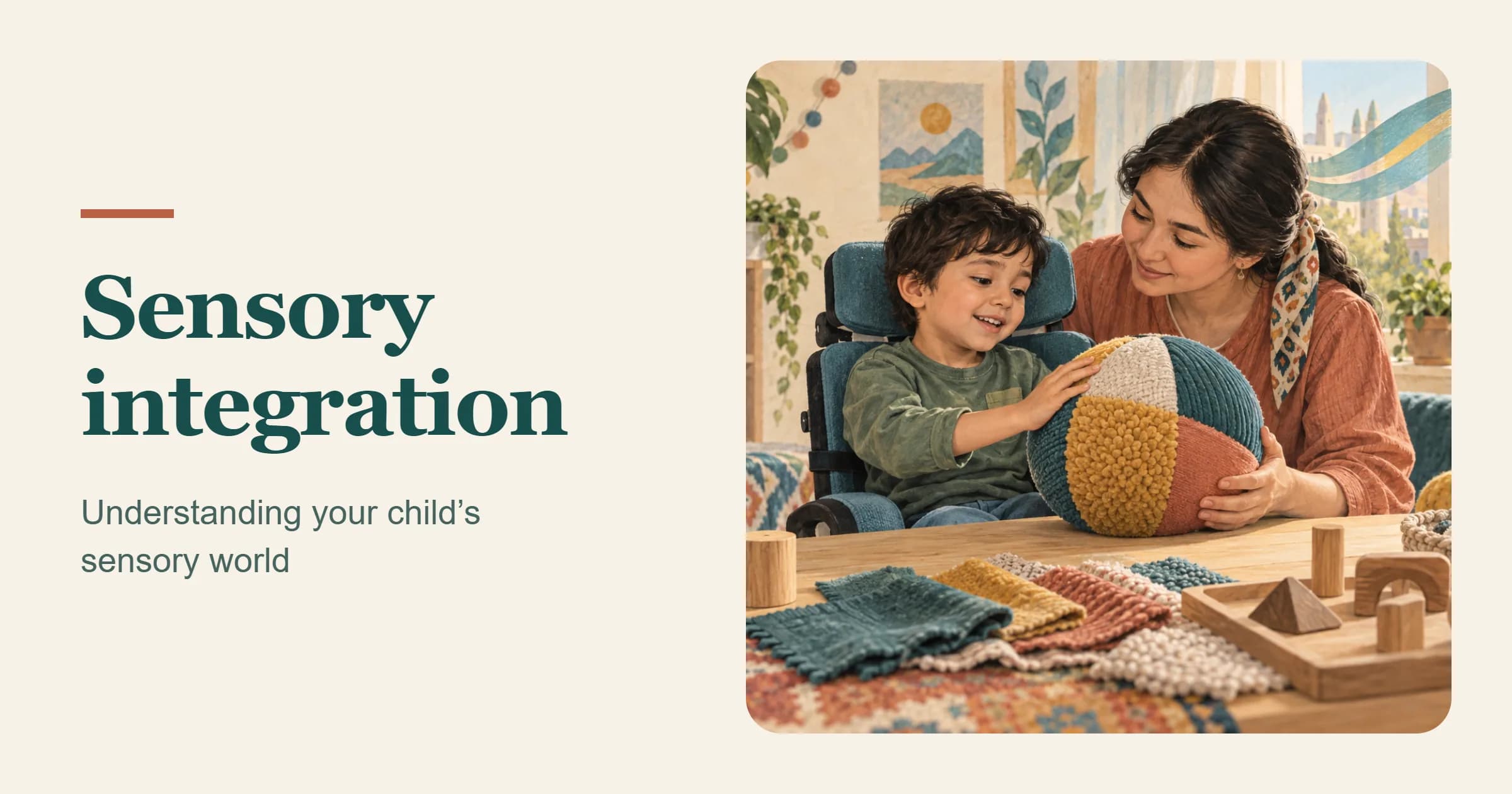

How well does a child feel their own body?
- Does your child often bump into objects while walking?
- Does your child find it hard to work out where to put an arm or a leg when getting dressed?
- Does your child press too hard on a pencil or hold toys too tightly?
- When your child falls or hits something, do they feel less pain than usual?
Situations like these may show that a child has difficulty feeling their own body and understanding where its parts are. All of this is considered a sign of a disturbed proprioceptive sense.
What is the proprioceptive sense and why do we need it?
You may ask: what is the proprioceptive sense, and why do we need it?
The proprioceptive sense helps a child feel where their body and its parts are, how they are moving and how much force they are using. It sends information from muscles, tendons and joints to the brain.
As for why we need it: if a child does not feel their body well, even ordinary daily tasks can become hard. For example:
- Why does my child struggle to get dressed? Because it may be hard to feel the exact position of an arm or leg and move it in the right direction.
- Why is it hard to sit straight on a chair or go down the stairs? Because proprioceptive information is needed to control body position and balance.
- Why does my child not control movements well during play? Because play also requires feeling the body, planning movements and coordinating them.
In these and similar situations the proprioceptive sense matters a great deal.
The main aim of developing the proprioceptive sense is not limited to improving movement. It is to help the child be aware of their own body, use their existing abilities in daily life and be as independent and active as possible. Put simply: the better a child feels their body, the easier it is to control and use it in everyday life.
Now let us move on to simple but useful exercises that can be done at home.
1. Pressing the palms together
How to do it: the child puts both palms together in front of the chest and presses lightly. They hold for 3–5 seconds, then relax. If needed, an adult shows how.
Aim: to feel the strength of the arm muscles and control the movement.

A boy sits cross-legged and presses his palms together in front of his chest while his mother shows the same movement beside him.
2. Pushing a basket of toys
What you need: a light basket and toys.
How to do it: the child pushes the basket from one side of the room to the other. Then they take the toys out of the basket and put them in a set place.
Aim: to coordinate arm and leg movements, control force and feel body position.
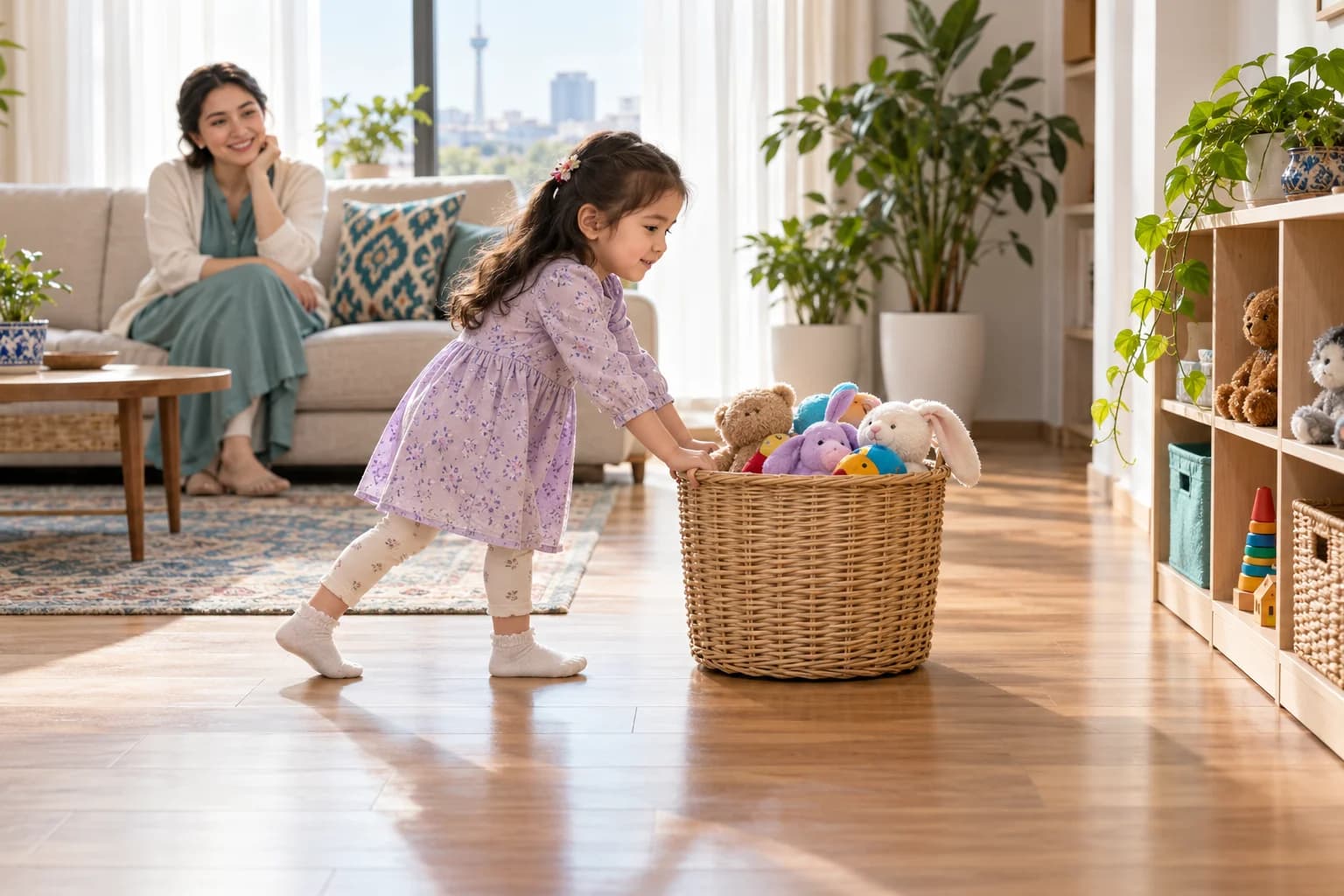
A girl pushes a wicker basket of soft toys towards a shelf while her mother watches from the sofa.
3. Wrapping in a sheet to stimulate tactile and proprioceptive senses
The child is in a comfortable position. Using a soft sheet, the parents lightly touch the child's body and so give sensory information. The child's reaction, breathing and comfort are watched all the time.
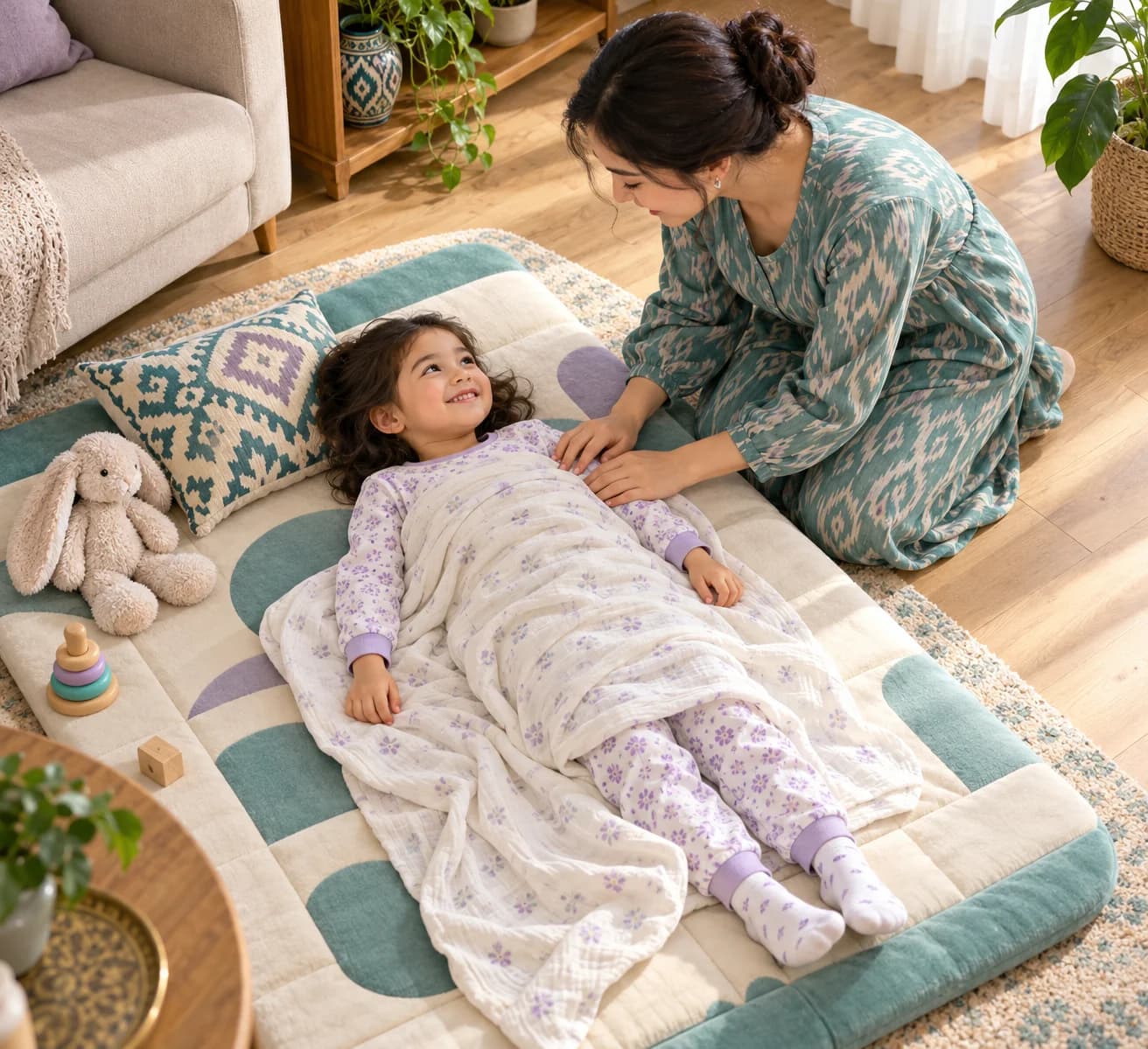
A girl lies on a soft mat under a light sheet, her face and hands free. Her mother kneels beside her and gently presses her palms on the sheet.
What to watch during the exercises
During exercises for developing the proprioceptive sense, watch the child's body position, how they control movement, their sensory reactions and signs of tiredness, and not only whether they perform the exercise itself.