
Every parent dreams of their child's smile, their first step, their first word. For parents of children with cerebral palsy (CP), this path often calls for more patience, more knowledge and more love. Why the idea of "sensory integration" matters along that path — let us talk about it in plain language.
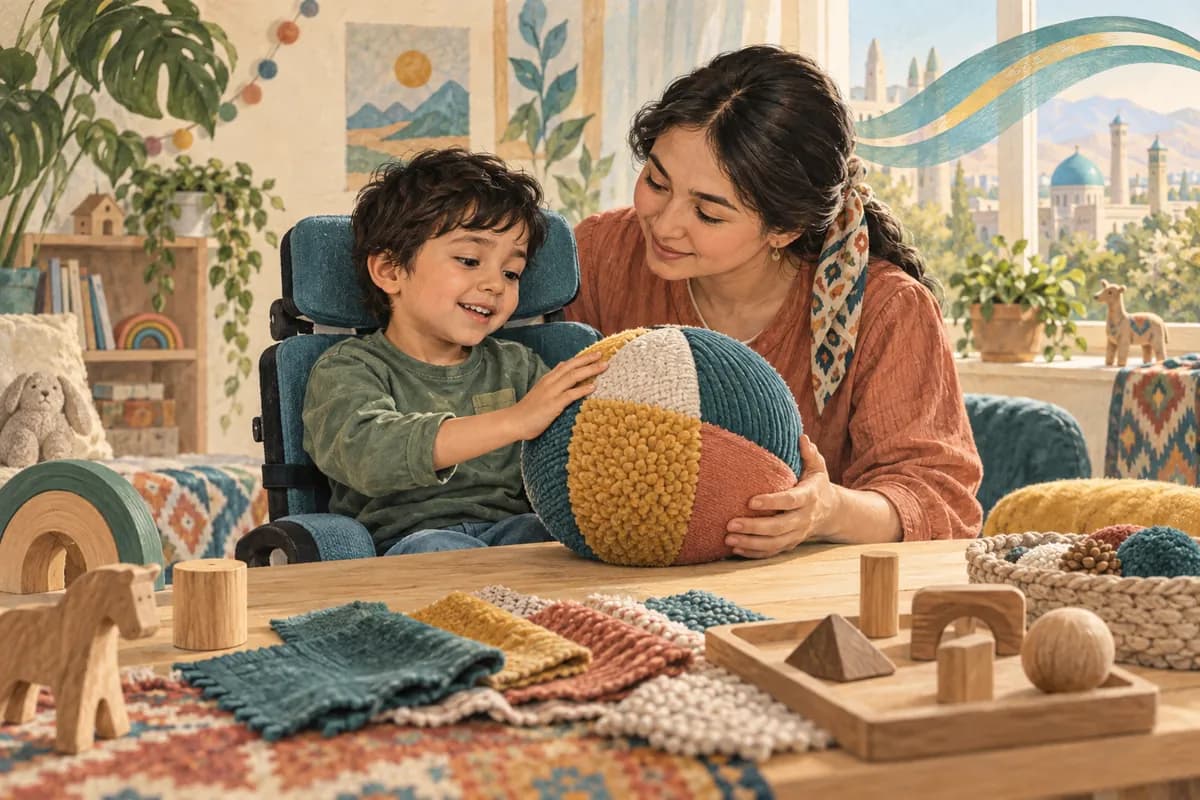
New sensations are easier to take in beside a trusted grown-up.
How does the brain process information?
Imagine this: at one and the same moment you see with your eyes, hear with your ears, feel warmth and touch through your skin, keep your balance and know where your body is. All of it happens instantly and without conscious effort — because the brain links these signals together and turns them into meaningful experience.
Sensory integration is the name for exactly that process: the brain's ability to take in signals from the different senses, put them in order, make sense of them and act on that basis.
In CP, the parts of the brain that control movement are damaged, and this often affects the processing of sensory information as well. A child may find it hard not only to control their muscles, but also to bear the touch of clothing on the skin, the loudness of sounds, tiring light, or to sense their balance while moving.
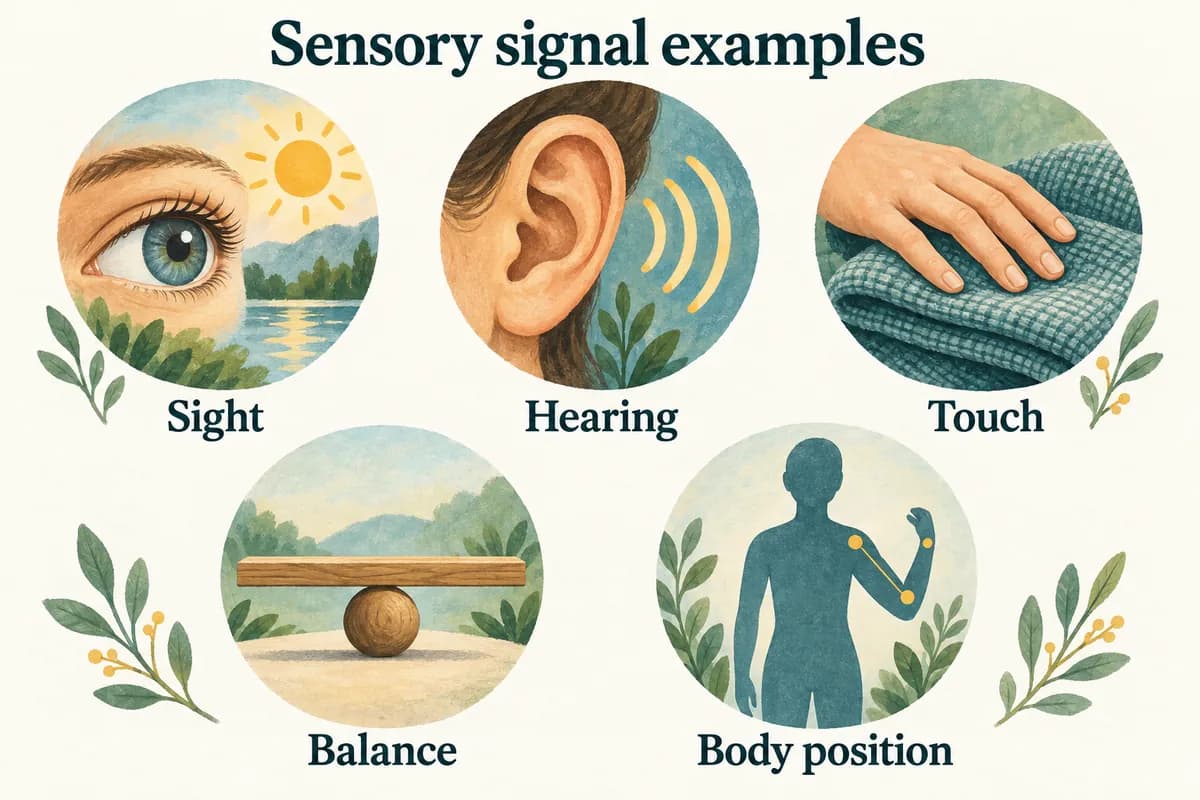
The brain takes in all these signals at once and builds them into one picture.
How does this show up in everyday life?
Parents often notice situations like these:
- certain fabrics or a tag on clothing bother the child a great deal;
- in noisy places (a market, a wedding, a playground) they tire quickly or cry;
- they are very afraid of spinning, swinging or coming down from a height — or, on the contrary, keep asking for such movement;
- at mealtimes they cannot accept the texture of certain foods;
- they find it hard to concentrate, to learn a new movement or to manage everyday tasks.
It is not worth judging behavior like this as mere "naughtiness" — in some cases it may be linked to difficulties the child has in taking in and processing sensory information.
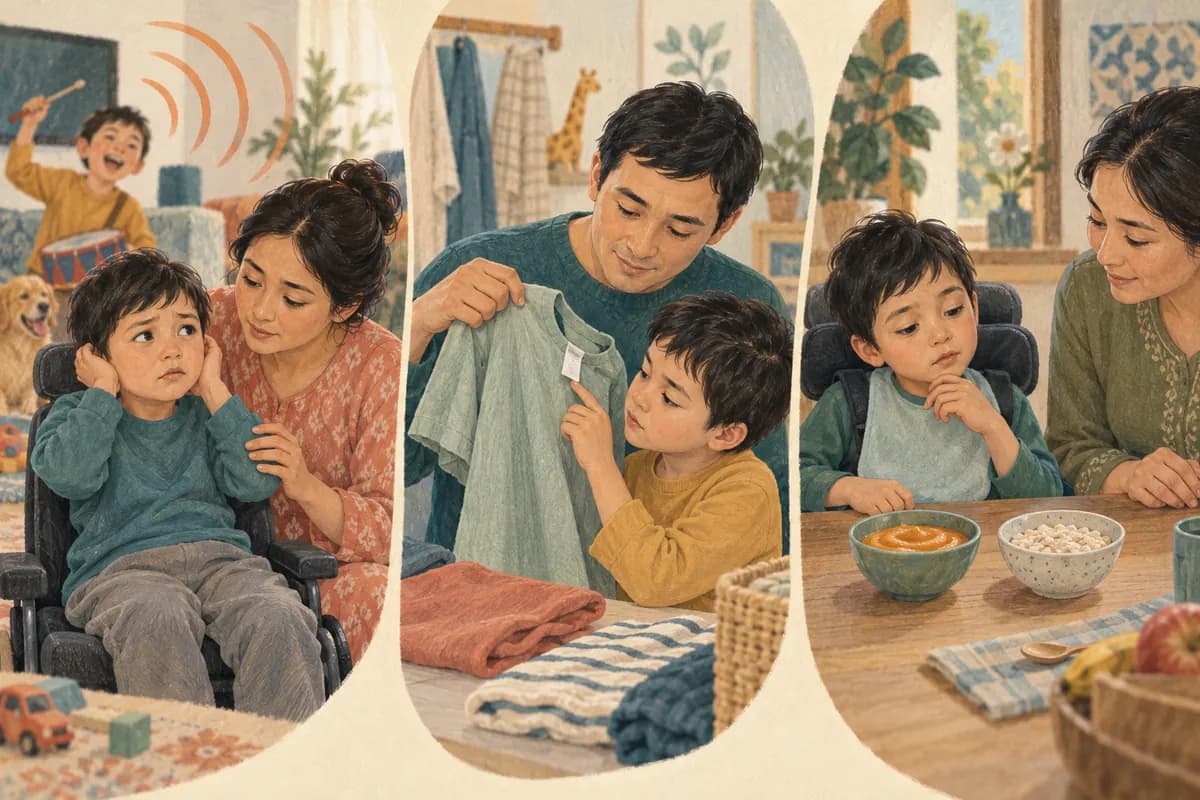
Behind "naughtiness" there are sometimes very ordinary things: a sound, a tag, the texture of food.
Why does this matter for parents?
Parents often think a child's behavior is a matter of character or upbringing, when the reason lies somewhere else entirely: in the way the nervous system processes information. Understanding this brings great relief: the child is not "to blame" — there is a specific process in which they need help.
A parent who understands sensory integration:
- begins to read their child's "strange" behavior correctly;
- learns to help the child at home with small, simple changes;
- passes on their own observations more precisely when working with specialists;
- learns to value the child's small achievements too — because a lot of work lies behind every step.

Respecting a child's "no" means hearing a signal, not arguing with it.
How does therapy become part of a child's life?
Sensory integration sessions usually build on the child's individual needs and on a specialist's assessment. They may use suspended hammocks, rocking platforms, materials of different textures and equipment for working on balance. Sessions like these are not simply play, but a set of activities with a specific purpose.
A specialist assesses the child's sensory needs, their sensitivity and their functional abilities, and builds an individual program on that basis. With regular sessions, some children show:
- a better sense of balance;
- less intense reactions to outside stimuli;
- an easier time concentrating;
- less strain in everyday activities (dressing, eating, playing).
This process is usually individual, and results can vary from one child to another. Most importantly, along this path the child has the support of parents and specialists.
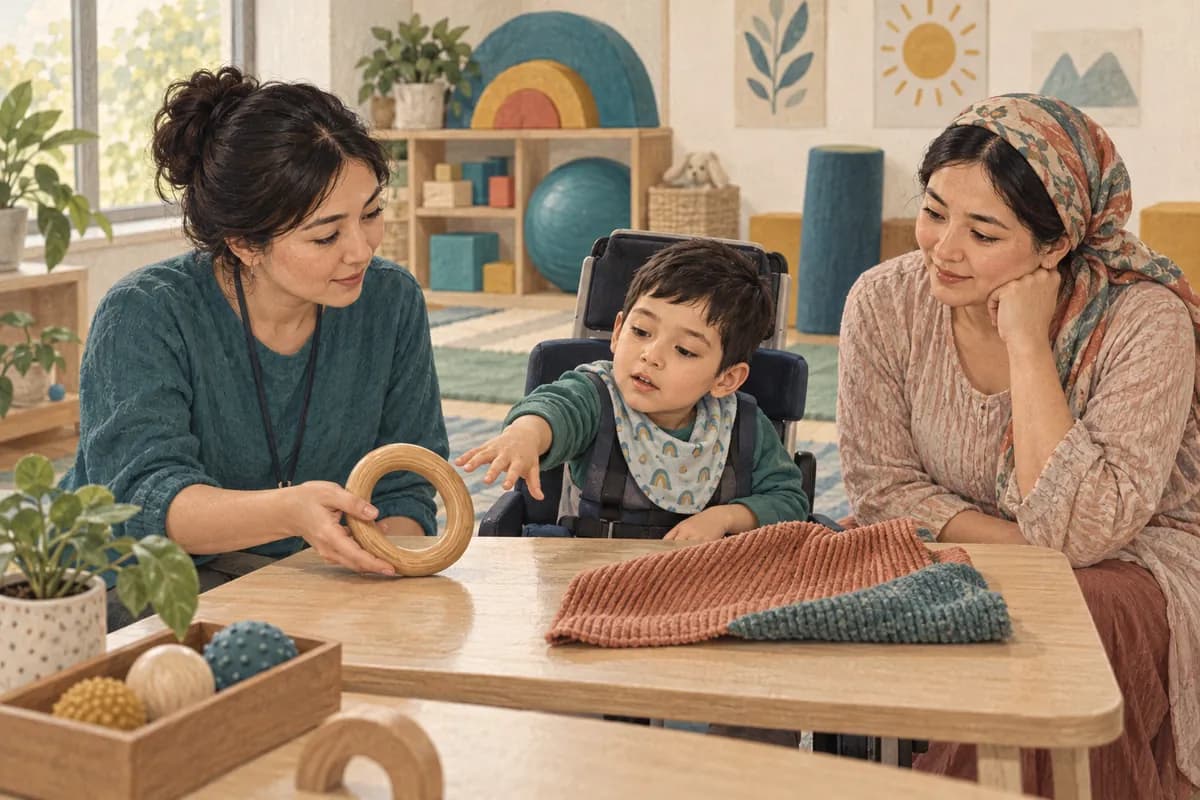
A specialist fits the materials to the child, not the child to the session.
What can parents do at home?
In line with a specialist's recommendations, everyday activities at home can support a child's development too:
- Introduce your child safely to objects of different textures (fabric, sand, dough).
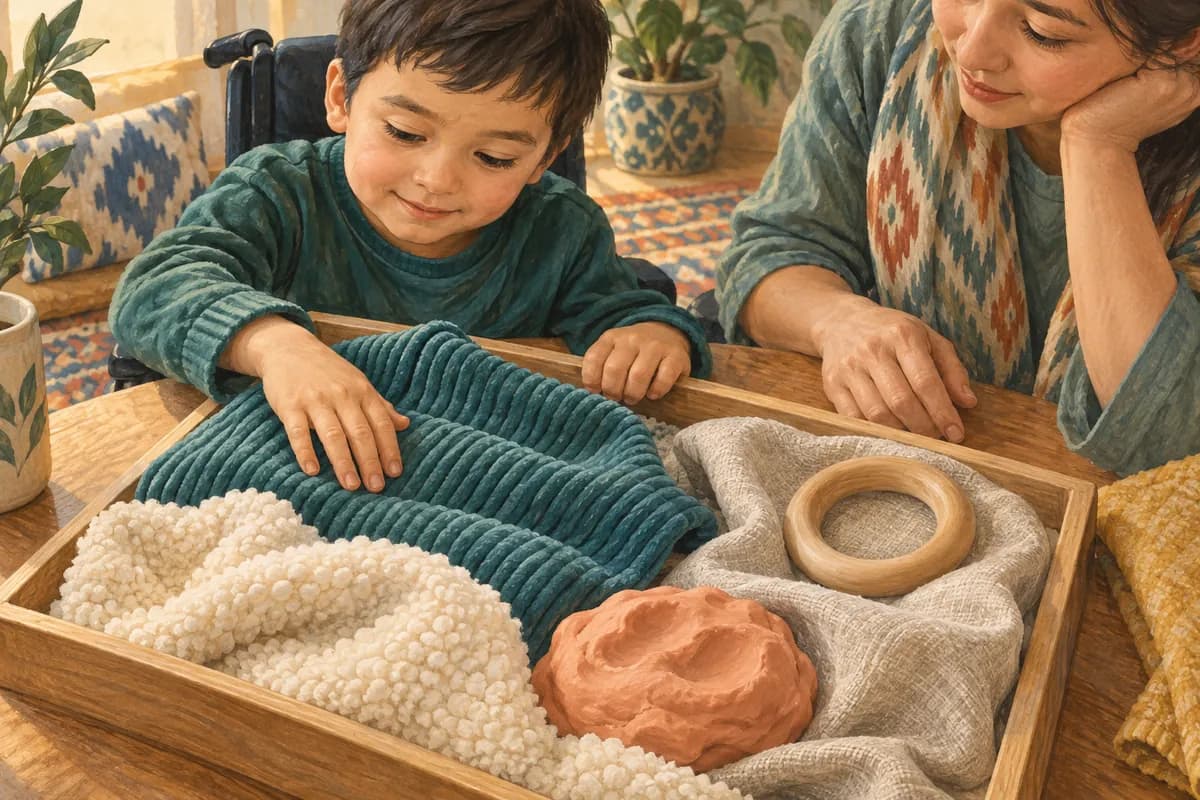
Introduce new textures calmly, without insisting when a child says no.
- Make the daily routine predictable — this gives the nervous system a sense of safety.
- Get your child used to noisy surroundings gradually, in small steps.
- Respect your child's "no" — it is often a signal of real discomfort.
- Follow the specialist's recommendations consistently, but without pressure.
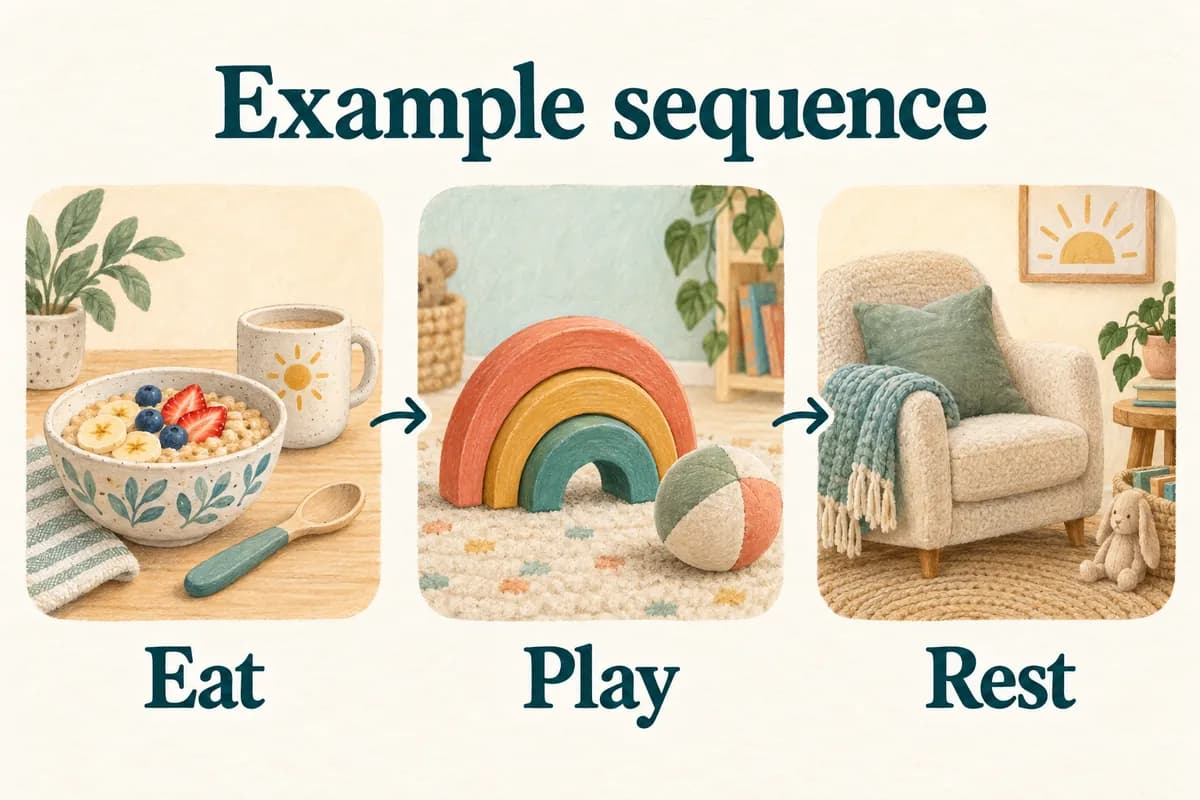
When the day is predictable, the nervous system is calmer — and so is the child.
This article is for information only and does not replace a consultation with a specialist who works with your child.
In closing
Every child has their own world, their own pace and their own path. Understanding sensory integration helps parents know their child more deeply, respect the way they feel the world, and help them in the right way on that basis.
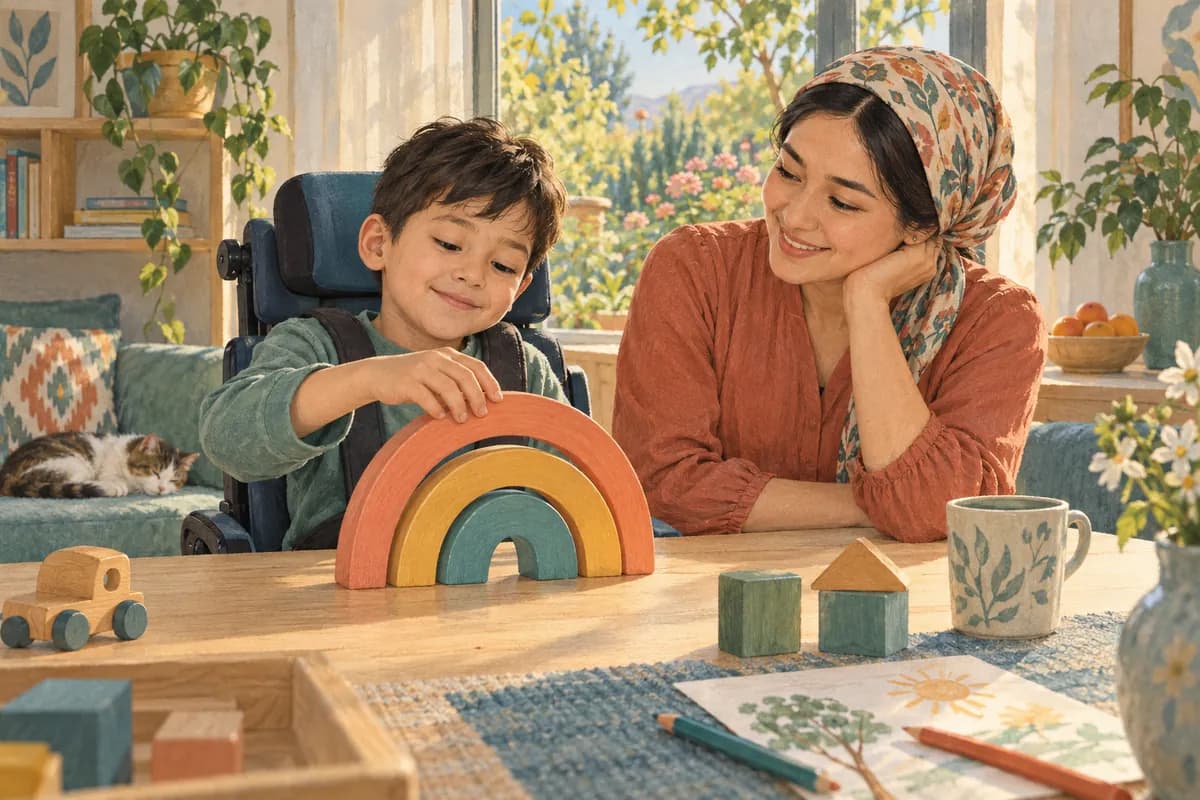
A lot of work lies behind every small step a child takes — notice it.
If you notice the signs described above in your child, the first sensible step is to consult a specialist. Sensory signs appear differently in every child, and it is important to assess them together with the child's overall development and functional condition. The clinic's specialists work with each child individually and guide parents through this process.
Sources
- Warutkar V.B., Kovela R.K. Review of Sensory Integration Therapy for Children With Cerebral Palsy. Cureus, 2022;14(10):e30714. DOI: doi.org/10.7759/cureus.30714
- Warutkar V.B., Kovela R.K., Samal S. Effectiveness of Sensory Integration Therapy on Functional Mobility in Children With Spastic Diplegic Cerebral Palsy. Cureus, 2023;15(9):e45683. DOI: doi.org/10.7759/cureus.45683
- Impact of sensory-based therapy on problems with balance and posture in children with cerebral palsy: a systematic review and meta-analysis. Discover Public Health, 2024;21:197. DOI: doi.org/10.1186/s12982-024-00281-z
- Yılmaz H., Badıllı Hantal F. Ş. Rewiring the Senses: The Impact of Sensory Integration Therapy on Balance and Cognition in Cerebral Palsy. Occupational Therapy International, 2026. DOI: doi.org/10.1155/oti/3715445
- Bumin G., Kayihan H. Effectiveness of two different sensory integration programs for children with spastic diplegic cerebral palsy. Disability and Rehabilitation, 2001;23(9):394–399. DOI: doi.org/10.1080/09638280010008843
- Cooper J., Majnemer A., Rosenblatt B., Birnbaum R. The determination of sensory deficits in children with hemiplegic cerebral palsy. Journal of Child Neurology, 1995;10(4):300–309. DOI: doi.org/10.1177/088307389501000412
- Pathways.org. Research: Sensory Processing and Cerebral Palsy. — pathways.org/research-sensory-processing-and-cerebral-palsy